If you have read my previous posts it should come as no surprise that I think a lot about time, which in itself might not be so surprising given its unrelenting nature.
”Time and tide wait for no man”
However, while time is unrelenting we can also use that to our advantage. As humans we often seem to want something for nothing: an athletes body, but we don’t want to follow their diet and exercise regime; a rich person’s bank account, but we don’t want to stop spending money on frivolities.
Fortunately, there are some not-so-well-kept ”secrets” on how to achieve this with minimal effort and the clever use of leveraging time. (The downside is that it does require patience and, well, time…)
There are some habits that, done consistently over time, will start to compound into something far greater than you might have thought was possible.
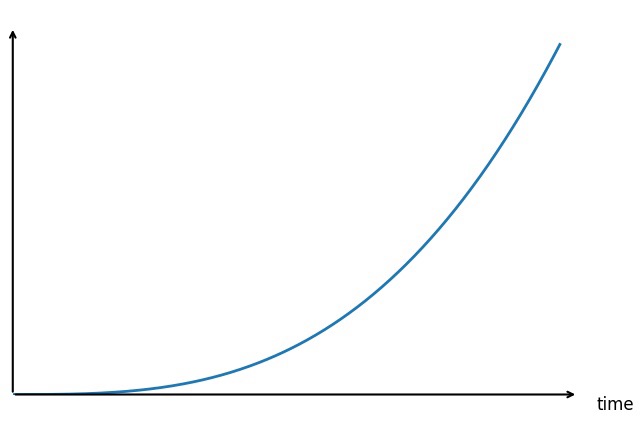
Having thought about this I also believe there are two main types of growth you will witness from consistent habits. One is exponential: it is slow in the beginning, but the longer you stay consistent with it, the faster it grows. Money is a good example of this.
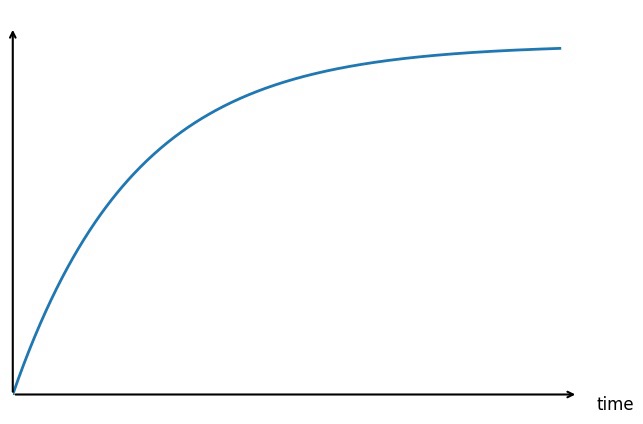
The other is logarithmic: it is fast in the beginning, showing quick results, but eventually reaches a point of diminishing returns for the same perceived effort. Exercise is a good example where your first year of running or strength training can show dramatic results but where the second, third, fourth year and on has far less dramatic results.
I believe that their nature, and our tendency to simplify data, makes us assume each is linear. It may certainly appear as such short term.
For example, while I have run on and off my whole life I didn’t truly start until around 2019. (And I have done similar bouts of strength training.) I made the decision that this time it was for life.
In the beginning the gains came easy, and a metric I could clearly see it on was my VO2 max (simply explained it is an objective measure of just how fit you are, at least with regards to endurance type activities). It went up more or less in a linear manner for months upon months, even the first couple of years.
However, eventually it plateued, the gains becoming less and less.
(For myself it wasn’t due to physical limitations as much as it was to lifestyle limitations. Having kids, increasingly demanding full time work, as well as other obligations did not lend itself well to maintaining 10+ hours of quality training per week. Or at least not according to my priorities and eventually I had to choose.)
I would lie if I didn’t say I felt a pang of de-motivation as I struggled to improve further. But I knew that eventually I would reach some plateue and would have to start looking for other ways to keep improving.
And this is where the elite are sifted from the rest.
They keep pushing, keep tuning their work outs, keep looking for those marginal gains that will make them stand out from the rest.
The same can be said for saving, investing and becoming rich, but here it may be more about not losing motivation early on.
Because when you start saving, preferably by investing your money wisely, the initial gains will be just about what you put in yourself and it will appear to increase in a more or less linear manner.
You save X money each month, and your savings or investment account goes up by X money each month. (This is heavily dependent on what types of risk you take on etc. Read up on what you invest in, this is not investment advice, and so on…)
However, with money something almost magical happens over time: If you consistently keep adding to your account and don’t withdraw anything, the money on your account will start growing faster than you can put in money. This is the beauty of compound interest. But:
It. Takes. Time.
Warren Buffett doesn’t have the highest returns per dollar, but he has been consistently ”good enough” with his investments over a very long period. This made him the richest man in the world.
Fortunately, when it comes to investing, you can automate almost anything these days and forget about it – your money will do the work for you.
Sometimes I wish I could do the same with running, but fortunately you can eventually come to enjoy even that which you once thought was horrible. (At least from my subjective experience with running.)
 David Luthman